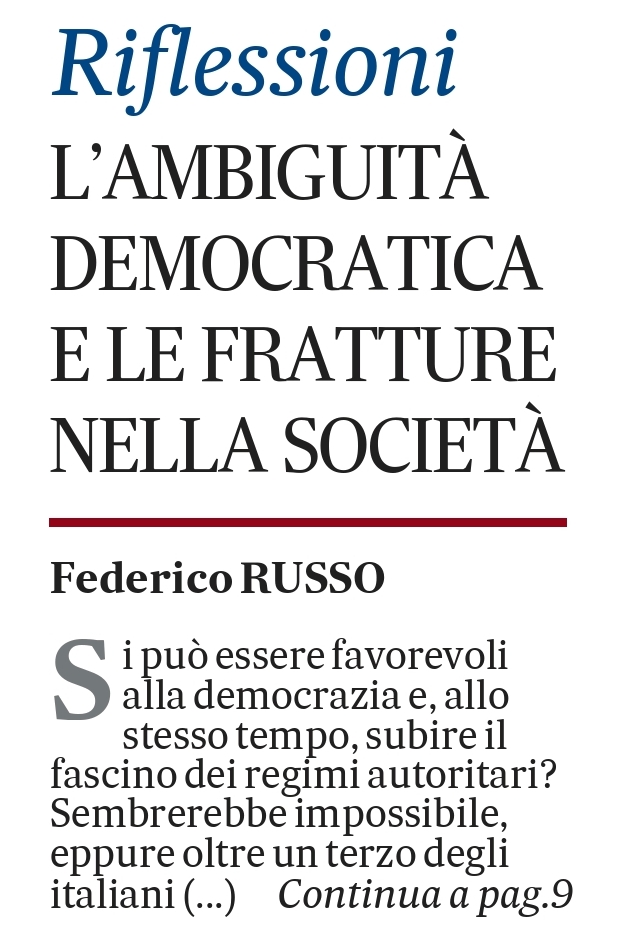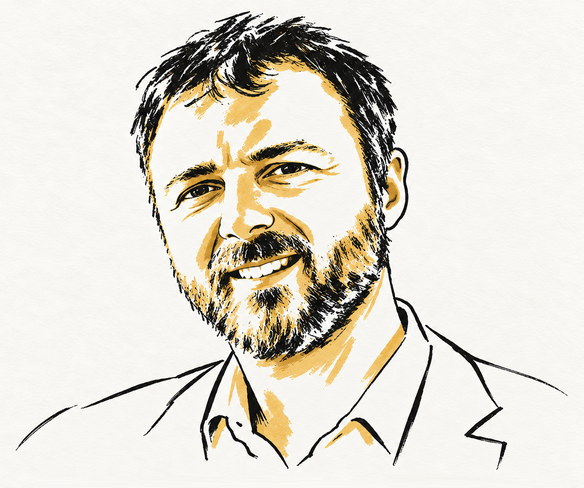
On 23 October 2026, Nuovo Quotidiano di Puglia published an article by Federico Russo, Professor of Political Science at the University of Salento and member of the REDIRECT project, exploring a growing contradiction in European democracies: citizens who express support for democracy while simultaneously favouring authoritarian forms of leadership.
Entitled “L’ambiguità democratica e le fratture nella società” (Democratic Ambiguity and Social Divides), the article draws on research conducted by a team at the University of Salento within the framework of REDIRECT. It examines the phenomenon of democratic ambiguity, whereby citizens endorse democracy in principle but are also willing to support leaders who operate without the constraints of political parties, parliaments and other democratic institutions.
Russo highlights the extent of this phenomenon across Europe, where more than one in five citizens expresses favourable attitudes towards unconstrained political leadership. In Italy, the proportion supporting a strong leader who is not subject to institutional limitations has almost doubled over the past decade, rising from 17% to 33%.
The article also explores the social divisions underlying these attitudes. Education emerges as a particularly important factor, with more highly educated citizens generally displaying stronger support for liberal democratic principles. Rather than interpreting this divide simply as a matter of political knowledge, Russo emphasises its structural dimensions. Educational attainment is closely connected to access to economic security, social influence and political representation. Citizens who feel excluded from these opportunities may increasingly perceive representative democracy as a system serving distant elites rather than their own needs.
These findings speak directly to REDIRECT’s broader research agenda, which investigates the relationship between citizens and political representatives, the sources of democratic disconnection and possible strategies for strengthening democratic representation.
Russo concludes by emphasising that the challenge facing contemporary democracies extends beyond defending their formal institutions. It also requires making democratic systems more inclusive and responsive, ensuring that citizens can meaningfully influence political decisions and that democracy is once again perceived as a means of collective empowerment.